• Home
  • Suggest A DIY
  • DIY Newsletter

Knitting

Free Patterns, Tutorials and Project Ideas

  • About CraftGossip
  • Our Network
    • Bath & Body Crafts
    • Candle Making Ideas
    • Crochet Ideas
    • Cross Stitch
    • Edible Crafts
    • Felting Patterns
    • Glass Art
    • Home & Garden Ideas
    • Indie Crafts
    • Jewelry Making
    • Kids Crafts
    • Knitting Patterns
    • Lesson Plans
    • Needlework
    • Party Ideas
    • Polymer Clay
    • Quilting Ideas
    • Recycled Crafts
    • Scrapbooking
    • Sewing Patterns
    • Card Making
    • DIY Weddings
    • Not Craft Ideas
  • Giveaways
  • Roundups
  • Store
  • Search

Bowling Set Knitting Pattern

February 12, 2025 by Sarah White

A thing that I love about knitting is that you can make just about anything you want out of the same basic stitches. You can make the most intricate lace shawl, complicated Aran sweater, amazing colorwork, fun toys, simple things, funny things, amazing things just with sticks and string.

I love having the opportunity to share as many of the options as I can with you all, which brings me to today’s post about a knit bowling set.

Take the Toddlers Bowling by Emily Ivey is exactly what it sounds like: a pattern for a bowling pin and ball. The pattern is worked with worsted weight yarn (black, white and red if you want to keep it traditional, but if you’re making it for kids rainbow colored pins are a great choice, too) and worked in the round. There’s a fair bit of shaping on the pins, but it’s not too difficult.

The designer used jar lids in the bases of the pins to help them stand up, and stuffing the ball with bits of old T-shirts gives it a bit of weight to help it knock down the pins. The yarn that was used was made with recycled polyester, which added eve more eco-friendliness, but that yarn has since been discontinued. Use something from your stash if you can and save yourself a trip to the store or your yarn a trip to you.

If I had known about this pattern when my daughter was younger I absolutely would have made it for her for a fun indoor playtime thing to do when it’s cold outside. I’m a little tempted to make one now anyway, even though she’s 15. We could all use some whimsical yarn projects in our life, right? I’m also thinking making them with thinner yarn might make them small enough to make a tabletop-sized bowling set. If you try it let me know if it works!

The pattern is available as a free Ravelry download.

[Photo: Emily Ivey]
«
»

Have you read?

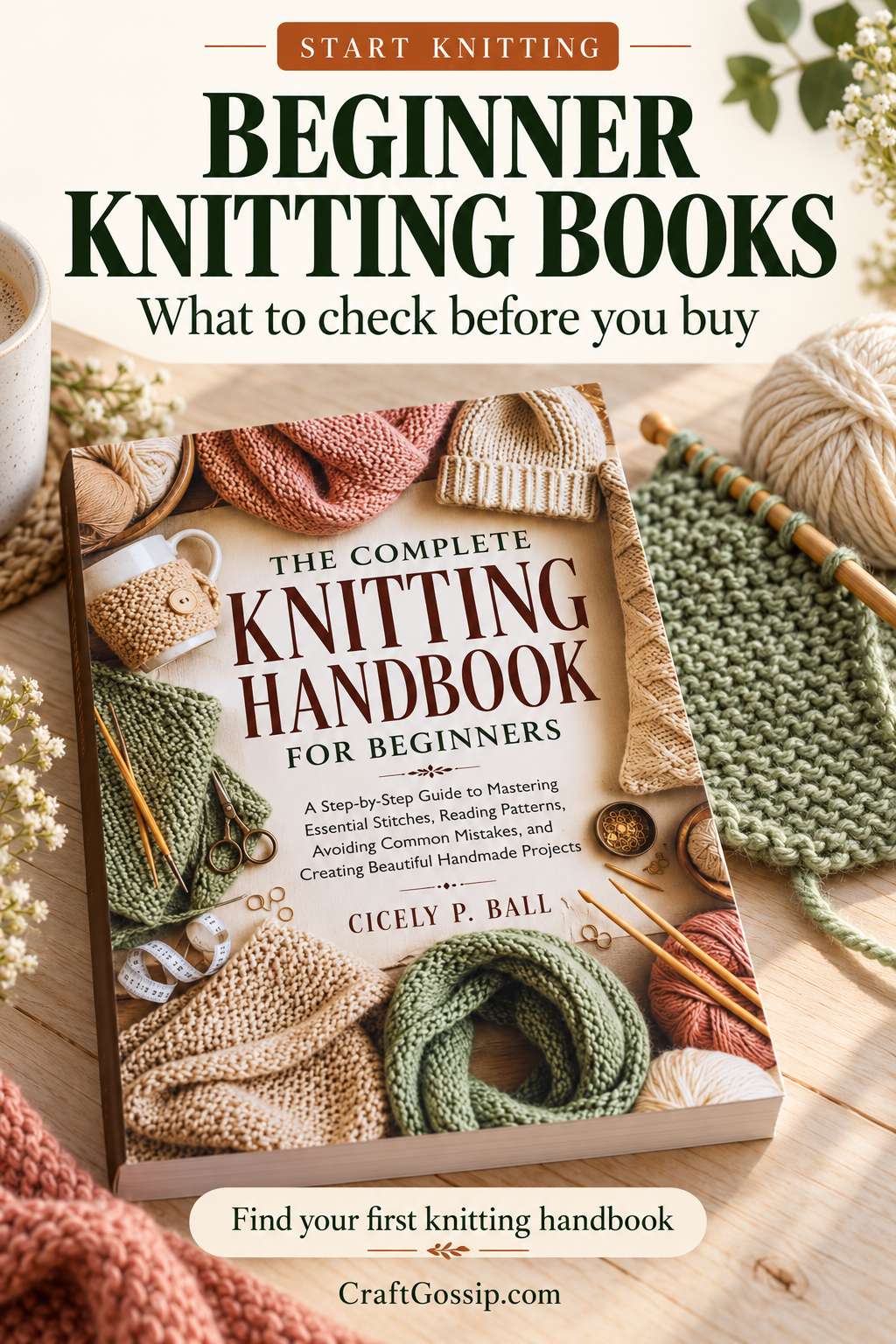
Complete Knitting Handbook for Beginners: What to Check Before You Buy

Buying your first knitting book should make learning easier. But when every cover promises simple stitches, beautiful projects and everything you need to know, choosing one can feel almost as confusing as choosing yarn. And we all know how quickly “just one ball” becomes a basket.

If you have spotted the Complete Knitting Handbook for Beginners on Amazon, you might be wondering whether it is the right place to start.

Before buying any beginner knitting handbook, I would look beyond the cover and check how it teaches the basics. A useful book needs to help you through those slightly awkward first rows, explain unfamiliar instructions and give you somewhere manageable to begin.

What Should a Beginner Knitting Book Include?

A good learn-to-knit book should assume you are starting from scratch. “Beginner” should mean you can arrive with yarn, needles and enthusiasm, without already knowing what “work as established” means.

Look for clear explanations of:

  • Choosing yarn and matching knitting needles.
  • Making a slip knot and casting on.
  • Working the knit stitch and purl stitch.
  • Counting stitches and rows.
  • Casting off, also called binding off.
  • Reading basic knitting abbreviations.
  • Joining a new ball of yarn and weaving in ends.
  • Understanding tension, also called gauge.
  • Recognising and correcting common mistakes.

The order matters, too. Instructions should teach a technique before asking you to use it in a project.

Check the Photographs Before Buying

Beautiful finished-project photographs are lovely inspiration, but the teaching images deserve closer attention.

Can you see where the needle enters the stitch? Is the working yarn visible? Does the next photograph show what happens after the yarn is pulled through?

For a complete beginner, several clear photographs of one stitch can be more useful than a page filled with tiny pictures of advanced techniques.

Also check the text size and contrast. A book you can comfortably read beside your knitting is far more useful than one you have to keep lifting towards the window.

Does It Explain Knitting Needles Clearly?

You do not need an enormous needle collection to begin. One suitable pair and a manageable first project will get you moving.

However, a handbook should explain needle sizes clearly, ideally including millimetres alongside any US or UK sizing. Those numbers are easy to mix up when you are shopping online.

If the terminology is unfamiliar, our overview of a knitting needle guidebook introduces a resource covering straight, circular and double-pointed needles.

For your first practice piece, choose smooth, light-coloured yarn and needles in the size range recommended on its label. Save the dark fluffy yarn for later. Learning is much easier when you can actually see the stitches.

Look for Small Projects That Build Confidence

A beginner knitting book does not need dozens of patterns to earn its place beside your favourite chair. A handful of carefully explained projects can be much more useful.

I would look for a progression such as:

  1. A small garter-stitch practice square.
  2. A simple rectangular project.
  3. A project combining knit and purl stitches.
  4. A small item introducing increases or decreases.

Each project should list the materials, finished measurements, required skills and any relevant gauge information.

Small projects also give you a satisfying finish without weeks of repetition. Once you are comfortable knitting and ready to practise shaping, our easy diagonal knit dishcloth pattern uses yarn-over increases and decreases to create a useful cotton cloth.

It is a practical next step when your practice squares are beginning to take over the coffee table.

Make Sure Mistakes Get Their Own Explanation

This is one of the first sections I would check in any beginner knitting handbook.

Learning to make a stitch is only part of learning to knit. You also need help when an extra stitch appears, a loop slips off the needle or your neat rectangle starts widening.

Look for troubleshooting advice that explains:

  • How to recognise a dropped stitch.
  • Why accidental yarn overs create holes.
  • How extra stitches can appear at the beginning of a row.
  • How to undo stitches carefully.
  • Why uneven tension is common while learning.
  • Why stocking stitch naturally curls.

That last point can save a beginner a great deal of frustration. Curling stocking stitch is a characteristic of the fabric, although a project may need borders or a different construction to manage it.

A helpful book should explain what you are seeing, rather than leave you assuming every unexpected result is your fault.

A Technique Handbook and a Pattern Book Do Different Jobs

Before buying, decide whether you need someone to teach you how to knit or simply give you projects to practise.

Those are different needs.

For example, our review of Complete Knit Collection for Beginners discusses a collection of beginner projects, while noting that it does not include instructions teaching you how to knit.

That distinction matters when buying for someone who has never picked up needles.

A returning knitter may be perfectly happy with patterns and a quick refresher. An absolute beginner usually needs a more detailed introduction.

Keep Your First Knitting Supplies Simple

If you are buying a knitting book as a gift, resist the temptation to add every accessory in the craft aisle.

A useful starter bundle can be quite modest:

  • One pair of appropriately sized needles.
  • Smooth yarn in a light or medium colour.
  • A blunt tapestry needle.
  • Small scissors.
  • A tape measure.

Amazon and Mary Maxim are useful places to browse basic knitting supplies, but choose materials to match the first project rather than buying a large assortment at random.

For dishcloths, washable cotton is a practical choice. For a scarf, consider softness against the skin and the washing instructions.

Is the Complete Knitting Handbook for Beginners Right for You?

Before ordering the Complete Knitting Handbook for Beginners, check any available sample pages for readable instructions, clear stitch illustrations and a sensible first project.

I would also check the author information, format and current edition details on the listing. If there is no usable interior preview, borrowing a copy or looking through it in person can help you make a more confident decision.

The best beginner knitting book is one you can follow comfortably, return to when something goes wrong and use to finish something you are pleased with.

Your first stitches may be uneven. Your first square may have opinions about being square. Neither means you are bad at knitting. Choose instructions that make the next step clear, start small and give yourself room to learn.

Categories

Afghans, Blankets, Throws baby hat Baby Patterns Beginner Book Reviews cardigans Christmas Craft News and Events Free Knitting Patterns Giveaways! Hats and Beanies Knit Knitting Patterns Knitting Technique & Tutorials mittens Quick Knits scarf shawl patterns socks Sweaters

RSS feed: More Articles More Articles

  • 15 Useful Christmas Gifts to Sew for People Who Have Everything
  • Santa Crochet Mason Jar Cozy Free Pattern
  • Printable Christmas Gift Tags That Match Kmart Wrapping Paper
  • Complete Knitting Handbook for Beginners: What to Check Before You Buy
  • DIY Christmas Wagons for Charming Handmade Holiday Displays
  • Feng Crochet: Calming Projects For A Harmonious Home
  • Book Review: Christmas Patchwork Loves Embroidery by Gail Pan
  • 10 Christmas Math Printables and Activities for Kids
  • LYKKE Indigo 5-Inch Interchangeable Knitting Needles: What’s in the Set?
  • Saggy Boob Scarf Free Crochet Pattern

Pick Your Blog

  • Sewing
  • Knitting
  • Quilting
  • Crochet
  • Home & Garden
  • Recycled Crafts
  • Scrapbooking
  • Card Making
  • Polymer Clay
  • Cross-Stitch
  • Edible Crafts
  • Felting
  • Glass Art
  • Indie Crafts
  • Kids Crafts
  • Jewelry Making
  • Lesson Plans
  • Needlework
  • Bath & Body
  • Party Ideas
  • Candle Making
  • DIY Weddings
  • Not Craft
  • Free Craft Projects

Copyright © 2026 · CraftGossip | Start Here | Contact Us | Link to Us | Your Editors | Privacy and affiliate policy