• Home
  • Suggest A DIY
  • DIY Newsletter

Knitting

Free Patterns, Tutorials and Project Ideas

  • About CraftGossip
  • Our Network
    • Bath & Body Crafts
    • Candle Making Ideas
    • Crochet Ideas
    • Cross Stitch
    • Edible Crafts
    • Felting Patterns
    • Glass Art
    • Home & Garden Ideas
    • Indie Crafts
    • Jewelry Making
    • Kids Crafts
    • Knitting Patterns
    • Lesson Plans
    • Needlework
    • Party Ideas
    • Polymer Clay
    • Quilting Ideas
    • Recycled Crafts
    • Scrapbooking
    • Sewing Patterns
    • Card Making
    • DIY Weddings
    • Not Craft Ideas
  • Giveaways
  • Roundups
  • Store
  • Search

Bring Some Texture to Your Sweater Knitting

February 24, 2025 by Sarah White

I generally think of adding color as a way to add interest to a sweater. You can easily throw in stripes or a bit of Fair Isle patterning, even on a sweater that’s meant to be plain, to make it a little more fun.

But there’s also something to be said for working a sweater in a solid color and using textured stitch patterns to make a project more interesting.

Tressa Weidenaa’s Bluewater Sweater began as wrap design, and then a cowl she designed for a class. The stitches looked to her like they would also be good on a sweater yoke, so the Bluewater Sweater was born, too.

The textured stitches are meant to look like ripples on water, inspired by a lake her family visited when she was young. It’s all knits and purls and a single color, which would make it a nice first sweater or one when you’re still early in your knitting journey.

The sweater is worked from the top down in DK weight or light worsted yarn and has a circular yoke. The pattern is charted, but just knits and purls worked in the round makes for pretty easy chart reading. There are 11 sizes to chose from, with a finished garment circumference ranging from 40.5 to 65.75 inches, or 103 to 168 cm. You can choose the amount of ease you would like, but it’s meant to have 4 to 6 inches, or 10 to 15 cm of positive ease.

You can buy this pattern on Ravelry, and if you’re interested in how the stitch pattern looks in other designs, also check out the Bluewater Cowl and Shawl. It’s really interesting to see how to same basic knit and purl patterns can be put to such different uses, or even just how they look different when stitched in different colors. Isn’t knitting fun?

[Photo: Tressa Weidenaar]
«
»

Have you read?

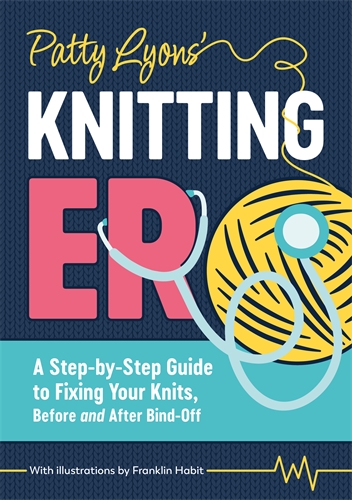
Book Review: Patty Lyons’ Knitting ER

Patty Lyons is known for teaching knitters the how and the why of knitting skills. Her Knitting Bag of Tricks helped knitters learn how stitches work, why we do things the way we do and what might be better alternatives. 

Patty Lyons’ Knitting ER aims to do the same with a particular focus on fixing mistakes in your knitting both before and after you bind off. She has deliberately made mistakes (and tons of accidental ones as well) to teach herself the best methods for fixing everything from a misplaced increase and a dropped edge stitch to faulty cable turns, messed up lace and brioche knitting disasters, to name a few. 

The book starts with a foundation of understanding how stitches work, how to read them, and the basic methods we use for fixing mistakes in knitting: frogging (ripping out several rows at a time), tinking (removing stitches across a row one stitch at a time) and dropping a stitch or several stitches on purpose to fix a mistake and ladder it back up. 

It talks about the most basic mistakes like accidental yarn overs and slipped stitches and how to fix them, as well as tips for using lifelines or slipping a smaller needle into your project to hold the stitches before you rip. 

Then we move on to more complicated fixes like picking up a dropped edge stitch, fixing a dropped cast on stitch, removing the twist from a circular knitting project (which you can only do after the first round is knit; this is an ER not a miracle station), fixing ladders in a project, tinking when you’re worked increases or decreases (or what to do when you forgot to add them) and fixing dropped stitches at the edges or short rows.

After that is the specialist’s office, which covers fix-it techniques you might not ever need, or only rarely, but it’s nice to have a place you can find the solution if you ever do need it. We’re talking fixing mistakes in a lace pattern, dealing with miscrossed cables (and counting rows in the cable so you when when it’s the right time to work it again), colorwork issues and brioche blunders. Some of these diagrams are sure to give you pause if you’ve never done something like dropping down a single cable for 20 rows and reknitting it, but again, it’s nice to know you can do those things if you need to. 

Even if your project is done it’s not too late for the doctor to do some good. You’ll also learn how to use duplicate stitch to make knit and purl stitches on the surface of a knitting project, which allows you to do things like fake a decrease you forgot, add a purl you missed in a textured stitch pattern, even fix mistakes in lace, stranded knitting, brioche and cables. 

There’s also tips for dealing with too tight cast ons and bind offs and floppy necklines, pieces knit too long or too short and very detailed instructions for grafting in probably any situation you might encounter, as well as approaches to major surgery.

A lot in these later chapters is kind of mind blowing, and if you’re not getting it from drawings, there are QR codes to videos that cover a lot of the problems and allow you to see the fixes in another way. And there are cute illustrations on the theme of knitting ER from Franklin Habit, too!

If you’ve ever wanted to know how to fix mistakes, minor or major, without having to rip out all of your knitting, this is the book you’ll want to have on your shelf for ready reference and reassurance throughout your knitting career. 

About the book: 208 pages, paperback, published 2026 by David & Charles. Suggested retail price $24.99.

Categories

Afghans, Blankets, Throws baby hat Baby Patterns Beginner Book Reviews cardigans Christmas Craft News and Events Free Knitting Patterns Giveaways! Hats and Beanies Knit Knitting Patterns Knitting Technique & Tutorials mittens Quick Knits scarf shawl patterns socks Sweaters

RSS feed: More Articles More Articles

  • Book Review: Patty Lyons’ Knitting ER
  • 10 Scrapbook Layout Ideas with Mixed Patterns for Fall and Halloween
  • Easy Shortbread Recipe: Buttery Fingers With No Rolling Required
  • Make Rustic Christmas Ribbon from Old Bed Sheets and Tiny Stamps
  • Free Crochet Hot Chocolate Mug Ornament Pattern For Christmas
  • Hanukkah Cross Stitch Projects
  • Christmas on a Budget -Scrap Fabric Christmas Gift Bags You Can Use Every Year
  • 10 DIY Recycled Christmas Jewelry Ideas
  • The Miffy Crochet Book Review: 16 Sweet Projects for Bunny Lovers
  • Christmas on a Budget – How to Style Your Christmas Table Using Things You Already Own

Pick Your Blog

  • Sewing
  • Knitting
  • Quilting
  • Crochet
  • Home & Garden
  • Recycled Crafts
  • Scrapbooking
  • Card Making
  • Polymer Clay
  • Cross-Stitch
  • Edible Crafts
  • Felting
  • Glass Art
  • Indie Crafts
  • Kids Crafts
  • Jewelry Making
  • Lesson Plans
  • Needlework
  • Bath & Body
  • Party Ideas
  • Candle Making
  • DIY Weddings
  • Not Craft
  • Free Craft Projects

Copyright © 2026 · CraftGossip | Start Here | Contact Us | Link to Us | Your Editors | Privacy and affiliate policy