 I love a good throwback knitting pattern, and in particular I have a soft spot for knit and crocheted Christmas stockings. My grandma knit stockings for her kids, their spouses and their children back in the day, and my mom knit them for all the kids of the next generation. I was also once tasked by a friend to crochet a few stockings for kids to match ones their grandmother had made a long time ago.
Using vintage or vintage inspired patterns for stockings (and other holiday decor, for that matter) is nice because it makes the projects instantly look like they’ve always been there.
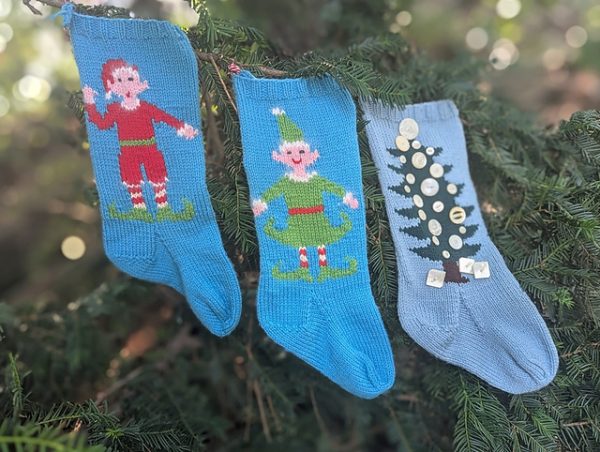
Jess Bandelin has a trio of designs to get you started with their Intarsia Christmas Stockings.
These worsted weight stockings are knit flat with a heel flap and are seamed after the knitting is done. This allows you to use the intarisa colorwork knitting technique, where you do each section of color with a separate ball of yarn rather than carrying the yarn across the row or round. These patterns use charts, but they’re pretty easy to read because the image on the chart looks just like what you’re knitting.
(If you’ve never done it before, check out my post on how to knit intarsia.)
The pattern options include an elf in a dress, an elf in trousers and a Christmas tree. I love this one in particular because it uses buttons as the ornaments on the tree, so it’s an easy way to add even more vintage flair. Alternatively you could add beads, embroider on the tree or just leave it plain if that’s more your style.
The elves are also super cute, and the one wearing trousers could easily be transformed into more of a Santa figure if you wanted. They’re done up in holiday colors here on a bright blue background, which is a lot of fun, but you can use any colors you like to make the vintage inspired stockings of your dreams.
Learn more and grab the patterns on Ravelry.
[Photo: Jess Bandelin]