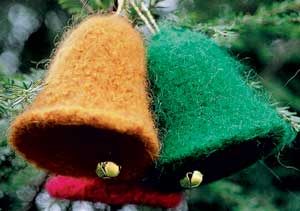
Felted Bells! I really like these. From Patternworks, here: http://www.patternworks.com/productdetail/200502/–FELTED-BELL-ORNAMENTS.htm
Have you read?
What Does PSSO Mean In Knitting? How To Pass A Slipped Stitch Over
If you’ve ever been happily knitting along and suddenly hit the abbreviation PSSO, you are not alone. Knitting patterns do love to throw tiny little letter combinations at us just when we’re feeling confident, don’t they?
The good news is that PSSO stands for “pass slipped stitch over”, and once you understand what is happening on the needle, it is much less mysterious than it sounds. In fact, if you already know how to bind off, you have probably done the same basic motion before without realizing it.
PSSO is commonly used in knitting decreases, lace knitting, sock shaping, buttonholes, and decorative stitch patterns. It can look a little intimidating in written instructions, especially when it appears as something like:
sl1, k1, psso
or
sl1, k2tog, psso
But don’t panic. We’re going to walk through what it means, how to do it, when to use it, and the little mistakes that can make it look messy.
If you’re still getting comfortable with pattern language, you may also like our guide on how to read a knitting pattern, because honestly, knitting abbreviations can feel like a secret code at first.
What Does PSSO Mean?
PSSO means pass slipped stitch over.
In plain English, it means you slip a stitch from the left needle to the right needle, work the next stitch or stitches, then lift that slipped stitch over the stitch beside it and off the needle.
That “passing over” action removes one stitch from your needle count, which is why PSSO is usually used as a decrease.
A very common example is:
sl1, k1, psso
This means:
- Slip 1 stitch.
- Knit 1 stitch.
- Pass the slipped stitch over the knitted stitch and off the needle.
You have now decreased by one stitch.
Another common version is:
sl1, k2tog, psso
This means:
- Slip 1 stitch.
- Knit the next 2 stitches together.
- Pass the slipped stitch over the k2tog stitch.
This decreases two stitches and is often used in lace knitting, shaped motifs, and decorative decreases.
How To Work PSSO Step By Step
Here is the basic method for working sl1, k1, psso.
Step 1: Slip One Stitch
Insert your right needle into the next stitch on the left needle and slip it across to the right needle without knitting it.
Most patterns will tell you whether to slip the stitch knitwise or purlwise. If the pattern does not say, many knitters slip knitwise for a decorative left-leaning decrease, but always follow the pattern if it gives specific instructions.
Step 2: Knit The Next Stitch
Knit the next stitch from the left needle as usual.
You should now have the slipped stitch and the newly knitted stitch sitting on your right needle.
Step 3: Pass The Slipped Stitch Over
Use the tip of your left needle to lift the slipped stitch up and over the knitted stitch.
Drop the slipped stitch off the right needle.
You have now worked a PSSO decrease.
It is very similar to the movement used when binding off, except you are doing it in the middle of a row or round rather than at the edge of your knitting.
What Does PSSO Look Like?
A PSSO decrease usually creates a left-leaning decrease. That means the stitch that is passed over sits across the top of the fabric and leans slightly to the left.
You may see PSSO used in:
- lace knitting patterns
- sock gusset shaping
- decorative decrease lines
- eyelet stitch patterns
- buttonholes
- vintage knitting patterns
- toy knitting patterns
- shaped motifs such as leaves, flowers, or points
If you’re learning lace knitting, PSSO often appears alongside yarn overs. A yarn over creates the hole or open space, while the decrease keeps your stitch count balanced. Our roundup of easy lace knitting patterns is a lovely place to practise those little yarn-over-and-decrease combinations without throwing your project across the room.
PSSO Compared To SSK
If you’ve used SSK, or slip slip knit, you may be wondering whether PSSO does the same thing.
Both PSSO and SSK are used as left-leaning decreases, but they do not look exactly the same.
PSSO often has a more visible stitch lying across the surface of the knitting. This can be lovely when the decrease is part of the design, especially in lace or decorative stitch patterns.
SSK usually looks smoother and is often used when you want a neater left-leaning decrease to pair with k2tog.
If your pattern specifically says PSSO, use PSSO. If you are designing or substituting decreases, it is worth swatching both to see which one looks better with your yarn and stitch pattern.
For a deeper look at shaping stitches, read our guide to knitting decreases, which covers common decrease styles and how they lean.
Common PSSO Abbreviations You Might See
Knitting patterns do not always write PSSO the same way. Here are some common versions.
sl1, k1, psso
Slip 1 stitch, knit 1 stitch, pass the slipped stitch over.
This decreases one stitch.
sl1, k2tog, psso
Slip 1 stitch, knit 2 stitches together, pass the slipped stitch over.
This decreases two stitches.
skpo
This usually means slip 1, knit 1, pass slipped stitch over.
It is another abbreviation for a very similar left-leaning decrease.
s1, k1, psso
This is just another way of writing sl1, k1, psso.
s1, k2tog, psso
This is another way of writing sl1, k2tog, psso.
When in doubt, check the abbreviation key in your pattern. And if the pattern doesn’t include one, that’s usually a sign to slow down and test the instruction on a small swatch first. Swatches are annoying, yes, but ripping back lace is more annoying. Ask me how I know.
How To Work sl1, k2tog, psso
This version is very common in lace knitting and creates a double decrease.
Here’s how to do it.
- Slip the next stitch from the left needle to the right needle.
- Knit the next two stitches together.
- Insert the left needle into the slipped stitch.
- Lift the slipped stitch over the k2tog stitch.
- Drop it off the right needle.
You have decreased two stitches.
This is the version you will often see in lace patterns where the designer wants shaping and texture at the same time.
Beginner Tips For Neater PSSO Stitches
Don’t Pull Too Tightly
The slipped stitch needs to pass comfortably over the stitch beside it. If your tension is too tight, the stitch can look stretched, puckered, or oddly twisted.
Keep your hands relaxed and let the stitch move over the needle naturally.
Watch Which Way You Slip The Stitch
Slipping knitwise twists the stitch. Slipping purlwise keeps the stitch sitting in the same orientation.
Neither is “wrong” on its own, but they create slightly different effects. Follow the pattern unless you are deliberately changing the look.
Use A Smooth Yarn While Learning
If you are practising PSSO for the first time, choose a smooth, light-coloured yarn. Dark yarn, fluffy yarn, and highly variegated yarn can make it harder to see what is happening on the needle.
A simple worsted-weight yarn and a comfortable pair of needles are perfect for practice. If you’re building a beginner knitting kit, places like Mary Maxim or Amazon are useful for basic yarn, stitch markers, needle sets, and little notions that somehow vanish into the sofa the minute you need them.
Practise On A Swatch
Cast on 20 stitches and practise a few rows of PSSO before using it in a real project.
Try this simple practice row:
K4, sl1, k1, psso, k to end.
Then try:
K4, sl1, k2tog, psso, k to end.
You’ll quickly see the difference between a single decrease and a double decrease.
Where You’ll See PSSO In Real Patterns
PSSO is often used in patterns that need both shaping and decoration.
You can see PSSO used in the lace cuff section of this free lace-top socks knitting pattern, where it helps shape the pretty cuff detail. It also appears in small novelty knitting projects, such as this Cadbury Creme Egg bunny knitting pattern, where decreases help shape the ears.
That’s one of the lovely things about learning a technique like PSSO. It pops up everywhere — socks, shawls, toys, blankets, dishcloths, vintage patterns, and those adorable tiny seasonal makes we all swear we’re only making one of before somehow making twelve.
What If My PSSO Looks Messy?
If your PSSO looks untidy, check these things first.
Did You Slip The Stitch The Right Way?
If your pattern says slip knitwise and you slipped purlwise, your decrease may sit differently. If it says slip purlwise and you slipped knitwise, the stitch may twist.
Is Your Tension Too Tight?
A tight slipped stitch can be difficult to pass over and may distort the fabric. Try loosening your grip slightly when slipping the stitch.
Did You Pass The Correct Stitch Over?
This is the most common beginner mistake. Make sure you are lifting the slipped stitch — not the stitch you just knitted — over the neighbouring stitch and off the needle.
Did Your Stitch Count Change Correctly?
After working sl1, k1, psso, your stitch count should decrease by one.
After working sl1, k2tog, psso, your stitch count should decrease by two.
If your count is off, tink back carefully and check each step.
Is PSSO The Same As Binding Off?
Not exactly, but it uses the same kind of movement.
When you bind off, you pass one stitch over another at the edge of your knitting to finish the fabric. With PSSO, you pass a slipped stitch over another stitch in the middle of a row or round to create a decrease or decorative effect.
So if you already know how to bind off, PSSO will feel familiar. You’re simply using that movement as part of a stitch pattern.
Quick PSSO Cheat Sheet
PSSO: Pass slipped stitch over
Common use: Decrease
Usually leans: Left
Often seen with: sl1, k1, k2tog, yarn over, lace patterns
Single decrease: sl1, k1, psso
Double decrease: sl1, k2tog, psso
Beginner tip: Practise with smooth, light-coloured yarn first
A Simple PSSO Practice Swatch
If you want to practise before starting a pattern, try this easy swatch.
Cast on 21 stitches.
Row 1: Knit.
Row 2: Purl.
Row 3: K5, sl1, k1, psso, k to end.
Row 4: Purl.
Row 5: K5, sl1, k2tog, psso, k to end.
Row 6: Purl.
Repeat these rows a few times and look closely at how the decreases sit in the fabric.
This is also a good time to practise reading your stitches. Once you can see what the slipped stitch is doing, PSSO becomes much easier to understand.
Helpful Knitting Resources
Once PSSO clicks, it opens up so many more knitting patterns, especially lace and shaped designs. If you’re working on building your knitting confidence, you may also find these helpful:
- How to Read a Knitting Pattern
- How to Follow a Knitting Pattern
- A Guide to Knitting Decreases
- Easy Lace Knitting Patterns
- Free Lace-Top Socks Knitting Pattern
Once you’ve worked PSSO a few times, it becomes one of those knitting techniques that sounds far more complicated than it really is. It’s just a slipped stitch, a worked stitch, and a little lift-over movement.
And truly, that’s half of knitting — tiny motions with dramatic names.