Every so often, a knitting pattern becomes so popular that it feels as though every knitter has either made one, queued one or quietly added yarn to their basket while insisting they are “just looking.”
The Ranunculus knitting pattern by Midori Hirose is definitely one of those designs.
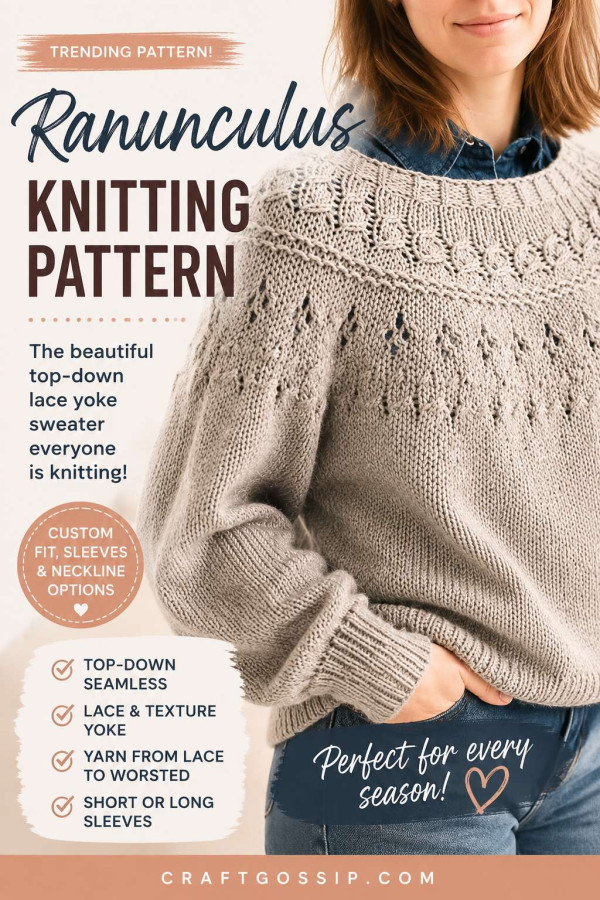
Originally published in 2017, Ranunculus is a top-down circular-yoke pullover decorated with a beautiful mixture of lace, eyelets and textured stitches. It can be knitted in yarn ranging from lace and light fingering through to worsted weight, with the choice of a smaller or wider neckline and short or long sleeves.
The result can be a light, floaty summer top, a softly fuzzy mohair sweater or a more substantial everyday pullover, depending on the yarn and gauge you choose.
You can purchase the authorised Ranunculus knitting pattern by Midori Hirose on Ravelry.
Please use the designer’s official page rather than one of the unofficial PDFs that sometimes appears online. Popular patterns have an unfortunate habit of wandering away from their creators, and supporting the original designer keeps more lovely patterns coming.
What Is the Ranunculus Knitting Pattern?
Ranunculus is a seamless pullover knitted from the top down in the round.
You begin at the neckline, work short-row shaping and then move into the decorative circular yoke. Once the yoke is complete, the sleeve stitches are placed on hold while the body is knitted in the round.
The pattern gives knitters several choices, including:
- A smaller or wider neckline
- Short sleeves
- Long puff sleeves
- Different cuff treatments
- A cropped or lengthened body
- Lightweight or more substantial yarn
One of the biggest advantages of this construction is that you can try the sweater on while it is still on your needles. That makes it much easier to adjust the body length, sleeve length and overall fit before binding off.
Our roundup of top-down sweater knitting patterns explains more about this useful construction method and includes several other sweaters you may enjoy. Top-down sweaters are especially handy when you prefer avoiding seams or want to make fit adjustments as you knit.
Why Is the Ranunculus Sweater So Popular?
Ranunculus has remained popular because it manages to tick several boxes at once.
It looks impressive, offers plenty of customisation and can be knitted using an unusually wide range of yarn weights. The loose gauge also means that it can be faster to knit than its decorative yoke might suggest.
There are now tens of thousands of Ranunculus projects recorded on Ravelry, with knitters using everything from cotton and silk to wool, alpaca and mohair combinations. The designer’s Ravelry page shows more than 36,000 linked projects, which gives you a very large gallery of yarn and colour inspiration.
It Works With Different Yarn Weights
The official pattern allows yarn from lace and light fingering through to worsted weight.
Thin yarn worked on comparatively large needles creates the light, open and slightly transparent fabric most people associate with Ranunculus. A thicker yarn, or two strands held together, produces more structure and coverage.
This flexibility makes the pattern tempting for stash knitters. You may already have a beautiful skein that was far too pretty to leave in the shop but has spent the past three years waiting patiently for you to decide what it wants to become.
It Can Be Made for Different Seasons
A lace or fingering-weight version can be worn over a camisole or summer dress, while a wool or mohair version makes a warm layering sweater for cooler weather.
For more lightweight garment inspiration, have a look at this lace raglan sweater that works across the seasons.
The Decorative Knitting Comes First
The interesting lace and texture are worked near the beginning of the project while your enthusiasm is still fresh.
After the sleeves are separated, much of the body is straightforward knitting in the round. That is much more motivating than knitting an entire plain sweater body while being promised that the exciting section will arrive eventually.
We have all had projects where “eventually” turned into “still sitting in a storage tub two winters later.”
It Is Easy to Personalise
Knitters regularly modify Ranunculus by changing the:
- Body length
- Sleeve length
- Neckline
- Ribbing
- Yarn weight
- Needle size
- Amount of positive ease
The sweater can be worn cropped over a dress or high-waisted trousers, but it can also be lengthened into a more traditional everyday pullover.
Is Ranunculus Suitable for Beginner Knitters?
Ranunculus is generally best suited to an adventurous beginner or intermediate knitter.
It is not necessarily difficult, but the decorative yoke includes several techniques that may be new if you have only knitted scarves, dishcloths and simple hats.
You should ideally be comfortable with:
- Knitting and purling
- Working in the round
- Yarn overs
- Basic increases and decreases
- Reading written instructions or charts
- Working short rows
- Placing stitches on waste yarn
- Picking up or returning to sleeve stitches
- Keeping track of repeated stitch sections
The pattern includes diagrams and supporting information, and many knitters comment that the design looks more complicated than it feels once you settle into the yoke sequence.
The official pattern page also links to several technique videos created to support the pattern.
If you would prefer to build your garment-knitting confidence first, browse our collection of free sweater knitting patterns. It includes simpler top-down, raglan and circular-yoke options that can help you become comfortable with sweater construction.
Helpful Ranunculus Video Tutorials
Visual demonstrations can make the more unusual instructions much easier to understand.
The Ranunculus cast-on overview video walks through the beginning of the sweater and was created as part of a Ranunculus knit-along.
There is also a complete Ranunculus assistance video playlist covering several techniques that may be useful while working through the pattern.
For the short-row section, this German short rows tutorial for Ranunculus provides a clear visual demonstration.
Use these videos alongside your purchased pattern rather than as replacements for it. Your stitch counts, sizing and full construction instructions should always come from the latest official pattern file.
Choosing Yarn for a Ranunculus Sweater
The best yarn depends on how you want the finished sweater to look and feel.
For a Light Summer Ranunculus
Choose a lace or fingering-weight yarn containing fibres such as:
- Linen
- Cotton
- Bamboo
- Silk
- Lightweight wool
- Wool and plant-fibre blends
These fibres can create a cool, draping fabric that works well over a camisole, tank top or summer dress.
Plant fibres may behave very differently from wool. Cotton, bamboo, linen and silk can stretch or relax after washing, so a properly washed gauge swatch is essential.
For a Soft Mohair Ranunculus
Hold one strand of fingering-weight yarn together with a strand of lace-weight mohair.
This produces the soft, fuzzy halo often seen in finished Ranunculus projects and also adds a little more coverage to the open fabric.
Our look at a colourful mohair sweater knitting pattern shows how mohair can create a garment that is both light and warm.
Mohair is not everyone’s cup of tea, of course. It can feel itchy against sensitive skin and has a remarkable ability to cling to itself when you try to unravel it.
A brushed alpaca, suri alpaca or synthetic halo yarn may be a more comfortable alternative.
Mary Maxim is worth checking for lightweight yarns and sweater quantities, particularly when you want a consistent dye lot. Amazon is also handy for interchangeable circular needles, stitch markers, row counters and blocking mats.
For a More Substantial Sweater
Use fingering, sport, DK or worsted-weight yarn that produces the required gauge and a fabric you enjoy wearing.
A smooth yarn will show the lace and textured stitches clearly. A fuzzy yarn softens the stitch definition and gives the sweater a more romantic, cloud-like appearance.
Neither approach is wrong. They simply create very different versions of the same design.
The Craft Yarn Council yarn-weight guide is a helpful reference when comparing lace, fingering, sport, DK and worsted yarns. It also explains the standard yarn-weight numbering system found on many yarn labels.
Always Make and Wash a Gauge Swatch
This is not the sweater to skip the swatch and hope for the best.
Ranunculus uses an intentionally open gauge, so small differences in stitch size can create a surprisingly large difference in the finished garment.
Make a generous swatch using the yarn and needles you plan to use. Wash and dry it in the same way you intend to care for the finished sweater.
Measure:
- Stitches before washing
- Rows before washing
- Stitches after washing
- Rows after washing
- The amount of stretch or relaxation
- Whether you like the transparency
- Whether the fabric feels stable enough
Do not rely entirely on the needle recommendation printed on the yarn label. Those recommendations are designed for a standard fabric, while Ranunculus deliberately uses a looser and more open gauge.
How Much Positive Ease Should You Choose?
Positive ease is the difference between your body measurement and the finished garment measurement.
For example, if your bust measures 100 cm and the sweater measures 130 cm, the sweater has 30 cm of positive ease.
Ranunculus is often shown with generous positive ease, producing its familiar loose and floaty shape. The designer’s photographs include versions worn with a substantial amount of ease.
Before choosing your size:
- Measure your full bust.
- Measure a sweater you already enjoy wearing.
- Compare that sweater with the pattern’s finished measurements.
- Think about the weight and drape of your yarn.
- Choose according to the finished fit you want rather than your normal shop-bought clothing size.
An airy lace fabric can often carry more ease without feeling heavy. A worsted-weight version knitted with the same amount of ease may feel much bulkier.
Ranunculus Knitting Tips Before You Cast On
Choose Your Neckline Carefully
The pattern includes smaller and wider neckline options.
A wider neckline gives the sweater its loose, modern appearance but may sit too low for some knitters. Check the finished measurements and look through Ravelry projects made using each option before casting on.
Use a Flexible Cast-On
The neckline still needs to fit comfortably over your head.
A cast-on that is too tight can make the sweater difficult to put on, even when the neckline itself is wide enough.
Add a Lifeline to the Yoke
Thread a strand of smooth waste yarn through the live stitches after completing a correct section of the lace yoke.
Should you discover an error later, you can unravel safely back to the lifeline rather than losing several evenings of work.
Lace knitting has a special talent for hiding a mistake until you are three pattern repeats beyond it.
Use Plenty of Stitch Markers
Place markers between repeated sections of the yoke.
This makes it easier to notice a missing yarn over, extra increase or incorrect stitch count before the problem travels around the entire sweater.
Count Your Stitches Regularly
Do not wait until the end of a major section to check your stitch count.
Counting after each increase or lace section can save a great deal of unpicking.
Try the Sweater On as You Knit
After separating the sleeves, transfer the stitches onto a long cable or spare yarn and try the sweater on.
Check the:
- Yoke depth
- Underarm position
- Bust ease
- Body width
- Overall length
- Sleeve opening
It is much easier to adjust these things while the sweater is still on the needles than after it has been bound off and blocked.
Alternate Hand-Dyed Skeins
When using hand-dyed yarn, alternate between two skeins every one or two rounds.
This helps blend small colour differences and prevents an obvious line where one skein ends and the next begins.
Common Ranunculus Knitting Problems
The Neckline Is Too Wide
Review the neckline option you selected and check your cast-on and ribbing gauge.
Some knitters use a smaller needle for the neckband, although it must remain stretchy enough to fit over the head.
You may also be able to reinforce a loose neckline later with a carefully worked crochet chain or a strand of elastic thread hidden inside the ribbing.
The Sweater Is Too Transparent
The open fabric is part of the Ranunculus design, but you still need to feel comfortable wearing it.
To create more coverage, you can:
- Choose a slightly heavier yarn
- Hold two fine yarns together
- Add a strand of mohair or alpaca
- Use a smaller needle after checking your gauge
- Wear the sweater over a camisole or tank top
The Yoke Is Too Deep
Check your row gauge as well as your stitch gauge.
Knitters often concentrate on the number of stitches per 10 cm while overlooking the number of rows. Row gauge controls the vertical depth of the yoke and can affect where the underarms sit.
The Sweater Grows After Blocking
This can happen with:
- Superwash wool
- Alpaca
- Cotton
- Linen
- Bamboo
- Silk
- Heavy, loosely knitted yarn
A washed swatch helps you predict this before knitting the entire garment.
When measuring your swatch, allow it to dry naturally without stretching it into the measurement you hoped to achieve. Swatches can sense desperation.
The Lace Stitch Count Is Wrong
Check each repeated section separately rather than recounting the entire round every time.
A missing yarn over is usually easier to repair than an incorrect decrease, particularly when it is found quickly.
Is Ranunculus a Quick Knitting Pattern?
Ranunculus can be a relatively quick sweater because it is worked at a loose gauge on larger needles.
The decorative yoke requires concentration, but the body is mostly knitted in the round. Cropped short-sleeved versions are understandably faster than long-bodied versions with full-length puff sleeves.
One recorded Ravelry project was completed in just three days, although that is certainly not a deadline the rest of us need to treat as a personal challenge.
The real knitting time will depend on your yarn, chosen size, modifications and how often life interrupts with inconvenient requests such as meals and clean laundry.
Ranunculus-Inspired Sweater Patterns
The official Ranunculus pattern should always be obtained from its designer, but there are plenty of related styles to explore.
Search for:
- Top-down circular-yoke sweater patterns
- Lace-yoke pullover patterns
- Cropped summer sweater patterns
- Mohair T-shirt knitting patterns
- Textured-yoke sweater patterns
- Seamless sweaters knitted in the round
- Oversized lace sweater patterns
You may also enjoy our review of Only Yoking, a collection devoted to circular-yoke sweater construction and design.
Etsy also has a large selection of independent lace-yoke and circular-yoke knitting patterns. Check the designer’s sizing information, gauge details, project photographs and customer reviews before buying, particularly when selecting a pattern for your first sweater.
Are You Looking for a Knitted Ranunculus Flower Pattern?
The search phrase “ranunculus knitting pattern” can have two meanings.
Most knitters are searching for Midori Hirose’s famous sweater, but others are looking for a knitting pattern inspired by the actual ranunculus flower.
Ranunculus flowers have many densely layered petals, so a convincing knitted version usually includes several graduated layers worked around a small central bud.
Knitted ranunculus flowers could be used for:
- Handmade bouquets
- Spring wreaths
- Brooches
- Hat decorations
- Floral headbands
- Gift wrapping
- Wedding decorations
- Table displays
Look for flower patterns using layered petals, I-cord stems and optional florist wire for support.
They are also an excellent way to use leftover yarn, although using leftovers somehow always seems to involve buying four additional shades to achieve exactly the right flower colour.
Is the Ranunculus Knitting Pattern Worth Making?
Ranunculus has remained popular because it gives knitters a great deal of creative freedom without requiring them to redesign an entire sweater.
It can be airy or cosy, cropped or lengthened, softly fuzzy or sharply textured. The top-down construction lets you assess the fit while you work, and the decorative yoke provides plenty of interest before you reach the easier body section.
It may not be the most basic first sweater pattern, but it is an achievable project for an adventurous knitter who is comfortable working in the round and ready to try lace, texture and short-row shaping.
Choose your yarn carefully, wash your swatch and compare the finished garment measurements before selecting your size.
That little bit of preparation gives you a much better chance of ending up with the sort of sweater you wear constantly, rather than one that spends the next two years on the “I really should fix that neckline” shelf.