• Home
  • Suggest A DIY
  • DIY Newsletter

Knitting

Free Patterns, Tutorials and Project Ideas

  • About CraftGossip
  • Our Network
    • Bath & Body Crafts
    • Candle Making Ideas
    • Crochet Ideas
    • Cross Stitch
    • Edible Crafts
    • Felting Patterns
    • Glass Art
    • Home & Garden Ideas
    • Indie Crafts
    • Jewelry Making
    • Kids Crafts
    • Knitting Patterns
    • Lesson Plans
    • Needlework
    • Party Ideas
    • Polymer Clay
    • Quilting Ideas
    • Recycled Crafts
    • Scrapbooking
    • Sewing Patterns
    • Card Making
    • DIY Weddings
    • Not Craft Ideas
  • Giveaways
  • Roundups
  • Store
  • Search

Getting Started Stash Busting: What’s in There?

January 9, 2014 by Sarah White

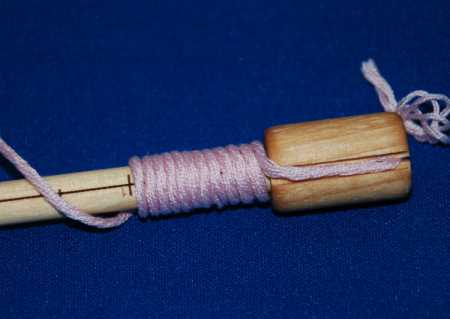
wraps per inch toolToday we’re ready to dive into the stash and start organizing it in a meaningful way for using it in projects.

For the most part when I think of using up stash I mean the little odds balls left over from projects, up to a full skein you might have bought for some unknown purpose that is now just taking up space in your stash.

Of course you can also have multiple balls of the same sort stashed, too, but in that case you probably already know what the yarn is and you might even have some idea of what you want to do with it.

For now, set multiple balls that still have their ball bands aside. We’re looking at the odd balls today. stash busting

Before you can decide what project you want to make with your odd balls and extra bits, you need to know what you have and have and you may also want to have some idea of how much yarn you have. I try to keep all my odd balls together and organized more or less by weight, so if I want to work on a medium-weight project like my giant stash busting blanket, I have all the little odd balls I might need at the ready.

By the way, if you don’t know what weight your yarn might be, grab a ruler or a wraps per inch tool (shown above) and measure the wraps per inch of the fiber, which will get you in the right ballpark.

For a blanket or a scarf you don’t need to know how much yarn you have by yardage, but if you want to make a sweater or a pair of socks or something you might want to know. If your yarn happens to be in hanks, you can actually measure the length and calculate from there. If it’s in balls, and you happen to have a ball band, you can weigh the yarn and do a little math. You can also run it on a yarn swift and count how many times around it goes (measure how much yarn it takes to go around the swift once, then multiply by the number of trips your yarn takes).

These tips will give you a better idea of how much yarn you’re actually talking about so you can more thoughtfully plan a project later. In the meantime, keep organizing those skeins and yarn balls and let me know how it’s going! Have you found any forgotten gems in your stash?
«
»

Comments

  1. Carmen in WI says

    January 9, 2014 at 3:48 pm

    I think I’m super-organized. My stash is all recorded in Ravelry along with pictures. The one thing I’d like to add this year is measurements of the partial skeins. I just estimated before. I like having it this organized because all I have to do is bring up my listing in Ravelry and see everything. It also helps me match projects with my yarns.

  2. Yvonne says

    January 9, 2014 at 4:00 pm

    I bought a yardage counter, a ball winder, zip lock bags (all sizes) as nd a note book. As I wind the balls in to nice, neat, center-pull cakes I get the yardage. Then I put a tag on the cake with the yardage and card in the bag with yardage name of yarn, color and any other info I have. I also record this in the notebook snd add a piece of yarn next to the description. I started this but have a long way to go!!!

  3. Lorinda says

    January 11, 2014 at 8:48 pm

    I have all my stash sorted by weight with the yardage marked in clear plastic cubbies. This way I can see at a glance what I want and not waste a lot of time hunting. I also have a notebook so if I have a project in mind, I can look in the notebook and see which yarn I have enough of for that project.

  4. Kara says

    January 13, 2014 at 6:20 am

    I tend to keep my stash sorted by fiber content, although all the sock yarn does live together. But I’m a spinner, I imagine I have more oddballs and unlabeled yarn than the average knitter! I’m trying to decide between tags with a string or ball/skein bands for the yarn I’ve made now that I’m experimenting with my hand cards and making custom blends.

Have you read?

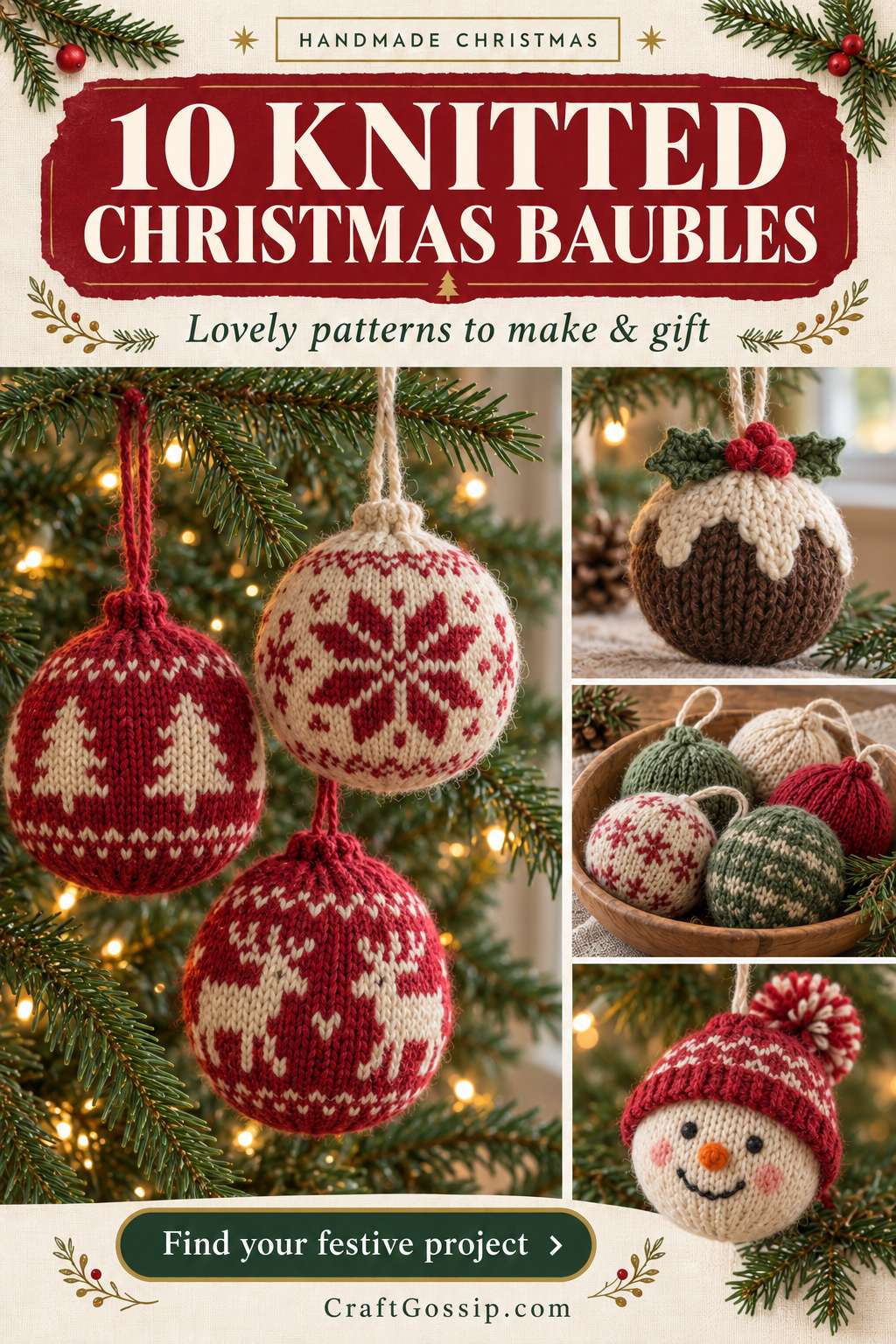
10 Knitted Christmas Bauble Patterns for a Tree Full of Handmade Charm

There’s always room for one more Christmas decoration, especially when it uses yarn you already own. That’s my reasoning, anyway. Those little leftover balls that aren’t quite enough for a hat suddenly look much more promising when you start thinking about knitted baubles.

I love the idea of adding a few handmade ornaments to the tree each year. They don’t all have to match, either. A traditional colourwork ball beside a slightly cheeky Christmas pudding feels far more interesting than a tree where everything arrived in the same box.

These knitted Christmas bauble patterns include flat-knit designs, festive characters and detailed colourwork ornaments. Most are free, with a paid collection included for anyone who wants plenty of designs to work through. Some suit newer knitters; others are small projects for practising skills you already know.

Christmas Baubles Knitted Flat

The free Christmas Baubles—Knit Flat pattern from Tat’sgrans Treasures is worth a look if knitting tiny rounds doesn’t appeal. It includes three sizes and charted words such as Peace, Hope, Love and Joy, worked using intarsia. The flat construction is approachable, although the lettering adds a challenge beyond basic stocking stitch. I’d choose this for meaningful gift ornaments, particularly when one of those words suits the person receiving it.

Christmas Pudding Bauble

The free Christmas Pudding Bauble by Amanda Berry has all the appeal of a festive pudding without anyone debating whether they actually like eating it. Knitted flat in DK yarn, it combines shaping, colourwork and seaming, with a little holly topper to finish. It’s best for confident beginners with some experience rather than someone learning their first knit stitch. At approximately 6 cm tall, it would make a lovely tree decoration or an extra treat tied onto a wrapped present.

Rudolf & Friends Character Baubles

The free Rudolf & Friends Ornaments by Claire Fairall bring a playful touch to a handmade Christmas tree. These character baubles are knitted flat, and the instructions include illustrations for assembly and embroidery. Hobbii lists the pattern as suitable for beginners, making it a useful option for knitters who would rather practise finishing details than stranded colourwork. The finished ornaments measure approximately 8 × 6 cm and would also look cheerful tucked into a handmade wreath.

Cute Christmas Baubles With Little Faces

The free Cute Christmas Baubles from Marianna’s Lazy Daisy Days turn small amounts of DK yarn into cheerful character decorations. Worked flat and seamed, they use simple shaping, stuffing and added facial details to create their personality. They suit knitters comfortable with knit, purl, increases and decreases who enjoy a little assembly afterwards. I rather like Marianna’s idea of using them on the Christmas dinner table before adding hanging loops for the tree.

Rudolph’s Nose Christmas Bauble

The free Rudolph’s Nose Bauble from DROPS Design is a useful choice when you want a traditional ball-shaped ornament. Designed in DROPS Flora, it uses knitting in the round with increases and decreases to create the shape. Choose this if you’re comfortable handling a small circumference and want a project focused on construction. I’d make a few in coordinating colours to bring a little consistency to an otherwise wonderfully mismatched handmade tree.

Merry Mints Bauble

The free Merry Mints Bauble from DROPS Design offers another festive option, this time designed in DROPS Cotton Merino. The instructions include working back-and-forth rows and shaping, so it’s worth considering if you prefer that approach to tiny rounds. Read through the construction before starting and pay attention to the instructions for working yarn overs to avoid unwanted holes. This would be a nice project for a knitter who enjoys seeing a shaped decoration emerge from a small piece of knitting.

Caorann Fair Isle Christmas Bauble

The free Caorann Christmas Bauble by Sarah Berry brings delicate Fair Isle detail to a small ornament. It uses fingering-weight yarn and 2.5 mm needles, with instructions sized for an approximately 60 mm bauble insert. Worked in the round, the design includes both written and charted directions for its repeated segments. I’d save this one for knitters with some colourwork experience who want to make a particularly special keepsake.

A Dated 2026 Christmas Bauble

The free 2026 Christmas Bauble by Smaatterier combines the year with two traditional Selbu rose motifs. It’s knitted in the round using stranded colourwork across the middle, with either fibre filling or a suitably sized plastic bauble inside. The charted design is listed as intermediate and finishes at approximately 6.5 cm tall. This is a lovely choice for marking a first Christmas in a new home, a family milestone or simply another year of making things by hand.

Colourful Christmas Balls From Two Strands

The free Christmas Balls by Mary Ann Stephens are full of colourwork detail, with optional touches such as duplicate stitch and nupps. The designer also discusses I-cord hanging loops, which give the ornaments a pleasingly substantial finish. These are better suited to knitters comfortable following charts and managing several colours than complete beginners. Follow the updated download directions in the post to find the patterns on the designer’s current website.

ARNE & CARLOS Christmas Ball Collection

The paid Twenty-four Christmas Balls 2024 collection by ARNE & CARLOS includes a basic ball pattern and 24 different motif charts. The ornaments are worked in the round using stranded colourwork, with a linked tutorial to help you follow the process. Although the designer lists the collection as beginner level, I’d be comfortable knitting in the round and making increases and decreases before starting. This is the pick for someone who wants a whole collection of coordinated ornaments rather than just one small project.

Choosing Yarn for Knitted Baubles

Small decorations are tempting stash projects, but check the yarn weight before diving into that leftover basket. A thicker yarn can make a much larger bauble, while changing the yarn in a fitted cover may stop it fitting the recommended insert.

For colourwork, choose shades with enough contrast for the motif to show. Two lovely colours can look surprisingly similar once they’re knitted together, especially on something this small.

Smooth yarn also makes it easier to see your stitches. Save the fluffy, sparkly and slightly mysterious leftovers for a pattern where you’re confident they’ll work.

Getting a Nicely Rounded Finish

If your pattern uses stuffing, add it gradually and spread it evenly. You’re aiming for a rounded ornament without stretching the stitches so far apart that the filling shows through. For designs worked over an insert, check the diameter and follow the instructions for when to put it inside.

Give the finishing a little time, too. A neat seam, securely woven ends and a tidy hanging loop help a small decoration feel properly finished.

I’d start with a pair for the tree and one to give away. Of course, once you’ve laid out all those yarn colours, “just three” may become a rather flexible arrangement.

Categories

Afghans, Blankets, Throws baby hat Baby Patterns Beginner Book Reviews cardigans Christmas Craft News and Events Free Knitting Patterns Giveaways! Hats and Beanies Knit Knitting Patterns Knitting Technique & Tutorials mittens Quick Knits scarf shawl patterns socks Sweaters

RSS feed: More Articles More Articles

  • Christmas Tree Crochet Scarf – A Fun and Festive Pattern Worth Revisiting
  • Paper Snowflake Art Book Review: 100 Patterns for a Nostalgic Paper Craf
  • 20 Infant Lesson Plan Ideas for Birth to 12 Months
  • Free Felting Tutorial Friday: Wet Felted Wool Cookie Cutter Ornaments
  • Free Poinsettia Embroidery Design Review
  • DIY Terracotta Pot Miniature Pond: A Mossy Little Water Garden for Your Patio
  • 20 November Lesson Plan Ideas for Preschool and Elementary
  • Book Review: Stitches from the Yuletide by Kathy Schmitz
  • Thanksgiving Scrapbook Layouts That Tell the Story Around the Table
  • How To Make Christmas Resin Jewelry: Easy Handmade Pendants, Earrings And Gift Ideas

Pick Your Blog

  • Sewing
  • Knitting
  • Quilting
  • Crochet
  • Home & Garden
  • Recycled Crafts
  • Scrapbooking
  • Card Making
  • Polymer Clay
  • Cross-Stitch
  • Edible Crafts
  • Felting
  • Glass Art
  • Indie Crafts
  • Kids Crafts
  • Jewelry Making
  • Lesson Plans
  • Needlework
  • Bath & Body
  • Party Ideas
  • Candle Making
  • DIY Weddings
  • Not Craft
  • Free Craft Projects

Copyright © 2026 · CraftGossip | Start Here | Contact Us | Link to Us | Your Editors | Privacy and affiliate policy