• Home
  • Suggest A DIY
  • DIY Newsletter

Knitting

Free Patterns, Tutorials and Project Ideas

  • About CraftGossip
  • Our Network
    • Bath & Body Crafts
    • Candle Making Ideas
    • Crochet Ideas
    • Cross Stitch
    • Edible Crafts
    • Felting Patterns
    • Glass Art
    • Home & Garden Ideas
    • Indie Crafts
    • Jewelry Making
    • Kids Crafts
    • Knitting Patterns
    • Lesson Plans
    • Needlework
    • Party Ideas
    • Polymer Clay
    • Quilting Ideas
    • Recycled Crafts
    • Scrapbooking
    • Sewing Patterns
    • Card Making
    • DIY Weddings
    • Not Craft Ideas
  • Giveaways
  • Roundups
  • Store
  • Search

Giveaway! Knitting Socks With Handpainted Yarns

March 21, 2009 by Terrye

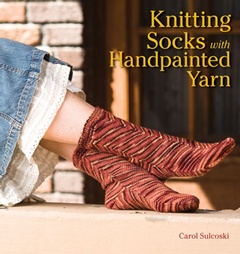
handpaintedIf you admire the hand knitted socks that all of your friends knit but never wanted to take them in hand, now is the time to grab your needles! This book by Carol Sulcoski and Interweave Press will seriously make you want to knit nothing but socks, and using handpainted yarns is just, well, fun!

Handpainted sock yarns have captured the hearts of countless knitters. Colorful sock yarns are little gems of the knitting universe, providing hours of knitting bliss that result in a luxurious hand-crafted item. Author Carol Sulcoski, owner of Black Bunny Fibers, a popular indie fiber sock yarn source, delves into the mystery of the handpainted sock yarn and divulges its secrets, explains how to make the best of these much-loved yarns, and shows how to knit with success with 20 new patterns designed just with these yarns in mind.

Knitters struggle with handpainted yarns. How do you design projects with them versus other types of yarns? How do you avoid the pitfalls of pooling and splotching? How do you combine multicolored handpaints with other types of yarns? Knitting Socks with Handpainted Yarn is designed to provide sock knitters with technical guidance so these wonderful yarns can be used to their best advantage, explaining the differences between various kinds of handpainted yarn and showing how to avoid undesirable effects. Combining her handdyeing and knitwear designing knowledge, Carol shares techniques and tips to help every sock knitter turn out fabulous footwear. Fun, original sock patterns from a variety of contributors illustrate these techniques. The patterns will be written for widely-available handdyed yarns so that readers can get the same results, but readers will also learn to identify patterns for their unique yarns.

Want this book for your stash? Leave me a comment by 3.31.09 telling me your favorite sock yarns and I’ll put you in the drawing!

Looking for more knitted socks designs and patterns to keep you warm this winter? Check out these knitted sock patterns on Etsy.
Next Pattern:

  • A Sweet Top to Show Off Colorful Yarns
  • Book Review - 52 Weeks of Socks: Beautiful patterns…
  • Sock Monkey Slipper Socks Knitting Pattern
«
»

Comments

  1. BeckyS says

    March 21, 2009 at 2:29 pm

    My favorite sock yarns are CPY’s Maizy, SWTC’s Tofutsies, and Sock Pixies hand painted Merino sock yarn. I also use Knit Picks Swish Worsted to make boot socks.

  2. Kristi says

    March 21, 2009 at 2:58 pm

    I like elann’s sock-it-to-me!

  3. Brittany says

    March 21, 2009 at 3:35 pm

    I love Lorna’s (despite the pooling!) and Cherry Tree Hill. There’s a lot to be said about Paton’s Kroy too for a solid, workhorse yarn!

  4. Nova says

    March 21, 2009 at 4:05 pm

    I’d like to make some organic cotton ones for when it’s cold around the house.

  5. Lynn says

    March 21, 2009 at 4:06 pm

    It’s hard to pick a favorite sock yarn, but I love knitting with Tempted Good Grrl and NummaNumma Toasty.

  6. Kramersmama says

    March 21, 2009 at 6:37 pm

    I love Lorna’s, Malabrigo sock, Colinette.

  7. Grace says

    March 21, 2009 at 7:50 pm

    Dear Carol, I would truely love this book, I have tried to knit socks now for 2 years! There are no kniters near me and so have been reading sock patterns trying to discover HOW to do this for a person like me with swollen feet.
    In answer to your request, I LOVE Cherry Tree Supersock Yarns. I once frogged a cuff ahd re cast on 17 times and this yarn took a beating and still looked great!
    Thank you for your kind offer. I would really cherish this if I win it and hope you would sign it. My primary website is http://www.ourchurch.com/member/h/HPA/ and I am on Ravelry.com under Halalsilks.
    I spin yarns now by hand spindle as I am quite ill.
    blessings,
    Grace in Vermont.

  8. Heidi says

    March 21, 2009 at 8:23 pm

    I love a 75-25 Superwash Merino wool and nylon blend for super soft and warm socks.

  9. Whitney says

    March 21, 2009 at 9:12 pm

    I love how trekking feels on my feet, though bamboo is lovely also.

  10. edina says

    March 21, 2009 at 9:16 pm

    I love Malabrigo and Sundara sock yarns!

  11. Anne says

    March 22, 2009 at 4:51 am

    I love Austermann Step because they are my warmest socks. But then I love the small amount of Cidermoon I have left and am hording.

  12. Monique says

    March 22, 2009 at 7:19 am

    Koigu is my favorite sock yarn. I love the muted colors. I get my favorite handpainted sock yarns from Castle Fibers (no affiliation).

  13. Annette says

    March 22, 2009 at 7:24 am

    I love socks!! I love a variety of yarns…. handpainteds, as well as basic solids. I particularly love yarns that are washable. I often bring sock yarns home with me as souvenirs.

    I like knitting socks toe up with magic loop and doing ‘fleegle’s’ heel.

    I’d love this book!

  14. luciep says

    March 22, 2009 at 7:33 am

    I love the sock yarn that Biscotte dyes. She doesn’t have any more in stock (http://www.etsy.com/shop.php?user_id=5569424), but when she does, she has some awesome colors.

  15. liza767 says

    March 22, 2009 at 7:39 am

    i have never knitted socks but would love to learn how

  16. Meg says

    March 22, 2009 at 11:49 am

    I have become obsessed with knitting socks this winter and my favorite so far is KnitPick’s Swish DK which is so warm and soft. I have my first handdyed yarn and have been coveting this book!

  17. Janice says

    March 23, 2009 at 9:55 am

    I love Malabrigo sock, Patons Kroy, and Plymouth Sock it to Me in the red colorway (?name). I also have started a new pattern using Berroco Sox.

  18. ikkinlala says

    March 23, 2009 at 11:52 am

    I love BMFA Socks That Rock, Lorna’s Laces, pretty much anything that’s spun tightly enough to be springy. I also love Briggs and Little Tuffy.

  19. Inbar says

    March 23, 2009 at 12:58 pm

    Hi,

    Your blog candy looks great!
    and it’s very nice to meet you… 🙂

    Inbar, Israel
    [email protected]

  20. Kim R. says

    March 23, 2009 at 1:39 pm

    Please enter in this great giveaway – my favorite sock yarn is Kroy Stretch. Thank you!

  21. flora says

    March 25, 2009 at 7:30 am

    Love the washability of Dream in Color “Smooshy”. One of these days I’ll score some Sundara…gotta love those colorways!

  22. Maureen says

    March 29, 2009 at 8:14 am

    I love Plymouth Happy Feet. It is so beautiful.

  23. britt breu says

    March 30, 2009 at 4:42 am

    I am a sucker for Regia 4-ply, especially the Kaffe Fasset Design Line in landscape colorways!

  24. Knitterella Purl says

    May 26, 2009 at 6:37 pm

    So far I have only been able to own Knit It Up! SeaWool yarn that I will use for socks, so it is officially my favorite!

  25. Sharon Hallman says

    June 20, 2009 at 4:16 pm

    I am 65 and taught myself to knit a couple of years ago. I am doing much better would love to learn how to knit socks. I have a hard time grasping the multiple technique.

Have you read?

How To Do Kitchener Stitch: A Beginner-Friendly Guide To Grafting Knitting Seamlessly

Kitchener stitch is one of those knitting techniques that feels a little bit mysterious until you finally sit down and do it. It is often used to close the toes of socks, but it is also a wonderfully neat way to join two sets of live stitches together without making a bulky seam.

If you have ever finished a beautiful sock and then paused at the toe because the pattern says “graft remaining stitches,” this is the tutorial you want to keep handy.

Kitchener stitch, also called grafting, creates a row of stitches between two pieces of knitting so the join looks almost invisible. Instead of binding off and sewing two edges together, you use a tapestry needle and yarn to form a new row of knitting between the live stitches.

It is one of the most useful finishing techniques for knitters, especially if you enjoy knitting socks, mittens, cowls, loop scarves, or garments where a smooth join matters.

You might also like this older CraftGossip post on grafting with Kitchener stitch, and if you want to go deeper into finishing techniques, this post on mastering grafting in knitting is another helpful read.

What Is Kitchener Stitch?

Kitchener stitch is a method of grafting two sets of live stitches together. The stitches stay on two needles, usually held parallel to each other, and you use a threaded tapestry needle to work through the stitches in a specific order.

When done well, the finished join looks like one continuous piece of knitting.

This is why Kitchener stitch is so popular for:

  • sock toes
  • mitten tips
  • shoulder joins
  • cowls
  • loop scarves
  • seamless tube projects
  • underarm stitches on some sweaters
  • small knitted bags and pouches

It is most commonly used on stockinette stitch, but grafting can also be adapted for other stitch patterns once you understand the basic idea.

Why Use Kitchener Stitch Instead Of Sewing A Seam?

The biggest benefit of Kitchener stitch is that it creates a smooth, almost invisible join. That matters most in places where you do not want a bulky seam, such as the toe of a sock.

A sewn seam across a sock toe can feel uncomfortable inside a shoe. Kitchener stitch avoids that by creating a flat, flexible finish.

It also gives knitted items a more polished look. If you are making gifts, charity knits, socks, or heirloom-style projects, learning this one technique can make your finished pieces look much neater.

For knitters who enjoy socks, you may also like this roundup of knitting patterns using sock yarn, especially if you have leftover yarn after finishing a pair.

Supplies You Need

To work Kitchener stitch, you will need:

  • two knitting needles holding live stitches
  • a tapestry needle or darning needle
  • yarn tail or matching yarn
  • scissors
  • good lighting
  • a little patience the first time

If you are working sock toes, most patterns will tell you how many stitches to leave on each needle before grafting.

As a general guide, leave a yarn tail at least three times the width of the stitches you are grafting. If you are unsure, leave a little extra. It is much easier to weave in a longer tail than to run out halfway across.

A blunt-tip tapestry needle is easier to control than a sharp sewing needle because it slides between yarn strands without splitting them as much. You can find tapestry needles, sock knitting tools, stitch markers, and finishing supplies through places such as Amazon, Mary Maxim, or your favorite local yarn store.

Before You Start: Set Up Your Stitches

For standard Kitchener stitch on stockinette:

Hold the two needles parallel, with the wrong sides of the knitting facing each other.

The right side of the knitting should be facing out.

The needle closest to you is the front needle.

The needle farther away from you is the back needle.

Thread your yarn tail onto a tapestry needle.

Try to keep the stitches sitting neatly on the needles and avoid twisting them before you begin.

The Kitchener Stitch Mantra

Many knitters remember Kitchener stitch with this little rhythm:

Front needle: knit off, purl on.
Back needle: purl off, knit on.

That means:

On the front needle, go into the first stitch knitwise and take it off. Then go into the next stitch purlwise and leave it on.

On the back needle, go into the first stitch purlwise and take it off. Then go into the next stitch knitwise and leave it on.

Once you get into the rhythm, it becomes much less intimidating.

Kitchener Stitch Step-By-Step

Setup Step 1

Insert the tapestry needle into the first stitch on the front needle as if to purl.

Pull the yarn through.

Leave the stitch on the knitting needle.

Setup Step 2

Insert the tapestry needle into the first stitch on the back needle as if to knit.

Pull the yarn through.

Leave the stitch on the knitting needle.

Now you are ready to begin the repeating sequence.

Step 1: Front Needle, Knitwise, Off

Insert the tapestry needle into the first stitch on the front needle as if to knit.

Pull the yarn through.

Slip that stitch off the knitting needle.

Step 2: Front Needle, Purlwise, On

Insert the tapestry needle into the next stitch on the front needle as if to purl.

Pull the yarn through.

Leave that stitch on the knitting needle.

Step 3: Back Needle, Purlwise, Off

Insert the tapestry needle into the first stitch on the back needle as if to purl.

Pull the yarn through.

Slip that stitch off the knitting needle.

Step 4: Back Needle, Knitwise, On

Insert the tapestry needle into the next stitch on the back needle as if to knit.

Pull the yarn through.

Leave that stitch on the knitting needle.

Repeat these four steps until all stitches have been grafted.

A Simple Way To Remember It

Say this out loud as you work:

Knit off, purl on.
Purl off, knit on.

It feels silly the first few times, but it works. Many knitters mutter this little phrase while closing sock toes, and honestly, anything that helps you avoid losing your place is worth doing.

How Tight Should Kitchener Stitch Be?

One of the most common mistakes with Kitchener stitch is pulling the yarn too tightly.

You are not sewing a seam closed. You are creating a new row of knitting.

After every few stitches, gently adjust the tension so the grafted row matches the surrounding stitches. If you pull too tightly, the join may pucker. If you leave it too loose, the grafted row may look stretched out.

A good trick is to look at the stitches beside the graft and try to match their size.

Do not panic if it looks a little uneven while it is still on the needles. Kitchener stitch often looks better once everything is off the needles and the tension has been gently adjusted.

How To Finish The Last Stitches

When you get to the final stitches, continue the sequence as closely as possible.

If there is only one stitch left on a needle, work the “off” part of the sequence for that stitch.

Pull the yarn through gently and then weave the tail into the inside or wrong side of the project.

For socks, weave the end into the inside of the toe so it will not be visible.

Troubleshooting Kitchener Stitch

My graft looks too tight

You probably pulled the yarn too firmly as you worked. Use the tip of your tapestry needle to gently loosen each grafted stitch, working from one side to the other.

My graft looks loose

Gently snug up the grafted stitches one at a time. Do not yank the working yarn all at once, as this can make one area tight and another loose.

I lost my place

Pause and look at the stitches. If the last stitch was removed from the front needle, you are probably ready to work the “purl on” part on the front needle or move to the back needle. If you are a beginner, it helps to say the mantra out loud every single time.

I split the yarn

A blunt tapestry needle helps prevent splitting. If a stitch looks split and messy, carefully undo that part before continuing.

The join looks like a seam, not a row of knitting

This usually means the tension is too tight or the needle was inserted in the wrong direction on some stitches. Practice on a swatch before using Kitchener stitch on a special project.

Practice Before Grafting A Real Project

If Kitchener stitch makes you nervous, knit two small stockinette swatches and place the live stitches on two needles. Use a contrasting yarn to practice grafting across the stitches.

Practicing with a different color makes it easier to see what the grafted row is doing. Once you understand the movement, try again with matching yarn.

This is especially useful before grafting handmade socks, because sock toes are small and can feel fiddly the first few times.

When Else Can You Use Kitchener Stitch?

Kitchener stitch is most famous for sock toes, but it is helpful in many other knitting projects.

Use it for joining the ends of a cowl or loop scarf, especially when you start with a provisional cast on. This CraftGossip post on making loop scarves from stash yarn mentions using a provisional cast on so the ends can be grafted together neatly.

You can also use Kitchener stitch for small bags, seamless headbands, mitten tips, and some garment joins.

If you are brushing up on knitting basics, this post on favorite ways to cast on is a good companion read, especially if you are learning how different beginnings and endings affect the finish of a project.

Kitchener Stitch For Sock Knitters

If you knit socks from the cuff down, Kitchener stitch is one of the most useful finishing techniques you can learn.

Most cuff-down sock patterns end with a small number of stitches divided between two needles. Kitchener stitch closes those stitches without creating a ridge across the toe.

For a comfortable sock toe:

Keep the stitches evenly divided.

Do not pull the graft too tightly.

Check that the toe lies flat before weaving in the end.

Use matching yarn whenever possible.

Once the sock is finished, blocking can also help smooth the stitches and even out the graft.

If you enjoy knitting small accessories, you might also like these easy headband knitting patterns, which are great projects for practicing finishing techniques on something smaller than a sweater.

Kitchener stitch has a reputation for being tricky, but it is really just a short sequence repeated across two needles. Once you remember the rhythm — knit off, purl on, purl off, knit on — it becomes much easier.

The real secret is to slow down, keep your tension relaxed, and remember that you are creating a row of knitting, not stitching a seam shut.

It may not feel natural the first time, but after a few sock toes or practice swatches, Kitchener stitch becomes one of those finishing skills you will be glad to have in your knitting toolkit.

Categories

baby hat Baby Patterns Beginner Book Reviews cardigan Christmas CraftGossip Giveaways Craft News and Events Free Knitting Patterns Giveaways! Hats Knitting Articles Of Interest Knitting Patterns Knitting Technique & Ideas mittens Quick scarf shawl patterns socks Sweaters

Featured Posts

Knitting Pattern – Half And Hald Baby Romper With Beanie

knitty sweater knitting pattern

Winter Knitty is Here for All Your Cozy Knitting Needs

Free Pattern – St Patrick’s Day Mistake Rib Scarf!

Perfect Big Sister-Little Sister Project!

Knit a Simple Tank Top with a Fun Twist

RSS More Articles

  • Cross Stitch Ice Cream and Frozen Treats
  • 15 Charity Sewing Projects That Let You Sew Something Useful For A Good Cause
  • Sunflower Ribbon Embroidery Tutorials and Kits to Brighten Your Hoop
  • Decorating Mistakes That Make Your Living Room Feel Cluttered
  • Remembering Jill Smokler, Founder Of Scary Mommy
  • In the Garden Layer Cake – A Bloom-Filled Fabric Collection for Spring Sewing
  • How To Do Kitchener Stitch: A Beginner-Friendly Guide To Grafting Knitting Seamlessly
  • Pattern Review: Georgie Granny Square Bucket Hat Crochet Pattern
  • 12 Handmade Patriotic 4th of July Card Ideas
  • Shark Week Learning for Kids

Pick Your Blog

  • Sewing
  • Knitting
  • Quilting
  • Crochet
  • Home & Garden
  • Recycled Crafts
  • Scrapbooking
  • Card Making
  • Polymer Clay
  • Cross-Stitch
  • Edible Crafts
  • Felting
  • Glass Art
  • Indie Crafts
  • Kids Crafts
  • Jewelry Making
  • Lesson Plans
  • Needlework
  • Bath & Body
  • Party Ideas
  • Candle Making
  • DIY Weddings
  • Not Craft
  • Free Craft Projects

Copyright © 2026 · CraftGossip | Start Here | Contact Us | Link to Us | Your Editors | Privacy and affiliate policy