• Home
  • Suggest A DIY
  • DIY Newsletter

Knitting

Free Patterns, Tutorials and Project Ideas

  • About CraftGossip
  • Our Network
    • Bath & Body Crafts
    • Candle Making Ideas
    • Crochet Ideas
    • Cross Stitch
    • Edible Crafts
    • Felting Patterns
    • Glass Art
    • Home & Garden Ideas
    • Indie Crafts
    • Jewelry Making
    • Kids Crafts
    • Knitting Patterns
    • Lesson Plans
    • Needlework
    • Party Ideas
    • Polymer Clay
    • Quilting Ideas
    • Recycled Crafts
    • Scrapbooking
    • Sewing Patterns
    • Card Making
    • DIY Weddings
    • Not Craft Ideas
  • Giveaways
  • Roundups
  • Store
  • Search

Planned Pooling in Knitting Projects

May 9, 2017 by Sarah White

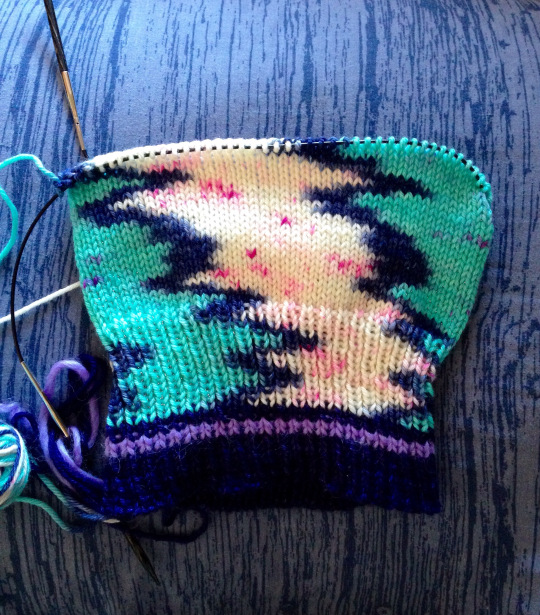
Play with planned pooling in your knitting.Self-striping, self-patterning, speckled and otherwise colored yarns are really popular right now, and the interesting thing about some of these yarns is that they can look quite different depending on the size needles you use, the gauge you’re getting, how many stitches you work per row or round or whether you are working flat or in the round.

I generally think of pooling — where a particular color lines up on different rows, making a blotch or pool of the same color on the knit fabric — as a bad thing, but you can do really cool things with pooling if you are intentional about it.

Marly Bird has been doing a lot lately with planned pooling in crochet, but the same kind of thing works in knitting, too.

Crafty Crusader wrote a post a while back about using planned pooling in a hat project, which pointed me to the Planned Pooling website. This site allows you to plug in colors and note how many stitches are worked in each color as well as how many stitches are in a row and whether it’s worked flat or in the round.

This allows you to see what a knit up swatch or garment would look like, and you can play with the numbers to get different effects.

It’s actually really fun to play with and makes me want to try my own planned pooling project soon.

Have you ever played with planned pooling or had something unintentionally cool come up when you worked with a self-striping yarn? I’d love to hear about it.

[Photo: Crafty Crusader.]
«
»

Comments

  1. Joy says

    May 12, 2017 at 11:27 am

    I have never done it, but think it is really cool, and I really like the picture you posted.

  2. 2bleubirdzsssing4u says

    December 27, 2018 at 8:32 am

    I had a variegated teal cotton yarn from Hobby Lobby that I crocheted into a dishcloth using an extended single crochet stitch. It made an X on the dishcloth. I made 2 with that skein, which turned out the same. I couldn’t duplicate it later to save my life, but years later I found some planned pooling videos on youtube and yes, Marly Bird. I’ve not tried it with knitting yet, but would like to do that sometime, too.

Have you read?

Knit a Plaid Cowl with a Built in Pun

As  long-time word nerd, there’s not a lot I like better than a pun. And what’s better than a pun in writing? A pun in knitting, because it really requires you to commit to it for as long as knitting the thing takes. 

If you think that it’s not possible to knit a pun, please allow me to introduce you to the Plaidypus Cowl by Mary P. Hunt. 

This is admittedly a pretty niche item to be sharing, but you know I have a thing for whimsy, and I don’t know that I’ve seen much lately as whimsical as a plaid knit platypus cowl. 

The project includes three different plaid options for you to choose from, and while the pattern calls for sport weight yarn its suggested you could also use DK weight if you prefer something a little heavier. 

There’s one size in the pattern, which makes a pretty deep cowl to fit a whole platypus (I mean plaidypus) on it. The sport weight version is 15 inches or 38 cm deep, which is definitely longer than the average neck. The DK weight one would be 17 inches/43 cm long and 27 inches/68.5 cm around, while the sport weight one is 23 inches or 58.5 cm in circumference.

That means it’s not easy to see what’s going on when you wear the cowl, but I actually think that’s part of the fun, too. When someone complements your cowl you can show them the secret!

I would also note that color selection seems to be really important in this project. Looking at the finished projects on Ravelry, on some it is easy to see the design and on others it is not. High contrast is important if you want the platy to be obvious, or you can choose an option that makes it blend in if you want. 

You can see finished projects and grab the pattern for your own on Ravelry. 

[Photo: Mary P. Hunt]

Categories

Afghans, Blankets, Throws baby hat Baby Patterns Beginner Book Reviews cardigans Christmas Craft News and Events Free Knitting Patterns Giveaways! Hats and Beanies Knit Knitting Patterns Knitting Technique & Tutorials mittens Quick Knits scarf shawl patterns socks Sweaters

RSS More Articles

  • Book Review: Fine Whitework by Jenny Adin-Christie
  • Learning Numbers for Preschoolers
  • 6 Free Celestial Coloring Pages
  • Happy Diwali Kids Elephant T-Shirt
  • Stitch a Colorful Cross Stitch Unicorn
  • Knit a Plaid Cowl with a Built in Pun
  • How To Make Bread Dough Jewellery – Craft Project Review
  • Free Halloween Crochet Patterns You Can Make in a Day
  • Best Chicken Ramen Broth Recipe: Rich, Golden And Full Of Flavour
  • Homemade Jewellery Cleaner Recipes Using Pantry Ingredients

Pick Your Blog

  • Sewing
  • Knitting
  • Quilting
  • Crochet
  • Home & Garden
  • Recycled Crafts
  • Scrapbooking
  • Card Making
  • Polymer Clay
  • Cross-Stitch
  • Edible Crafts
  • Felting
  • Glass Art
  • Indie Crafts
  • Kids Crafts
  • Jewelry Making
  • Lesson Plans
  • Needlework
  • Bath & Body
  • Party Ideas
  • Candle Making
  • DIY Weddings
  • Not Craft
  • Free Craft Projects

Copyright © 2026 · CraftGossip | Start Here | Contact Us | Link to Us | Your Editors | Privacy and affiliate policy