• Home
  • Suggest A DIY
  • DIY Newsletter

Knitting

Free Patterns, Tutorials and Project Ideas

  • About CraftGossip
  • Our Network
    • Bath & Body Crafts
    • Candle Making Ideas
    • Crochet Ideas
    • Cross Stitch
    • Edible Crafts
    • Felting Patterns
    • Glass Art
    • Home & Garden Ideas
    • Indie Crafts
    • Jewelry Making
    • Kids Crafts
    • Knitting Patterns
    • Lesson Plans
    • Needlework
    • Party Ideas
    • Polymer Clay
    • Quilting Ideas
    • Recycled Crafts
    • Scrapbooking
    • Sewing Patterns
    • Card Making
    • DIY Weddings
    • Not Craft Ideas
  • Giveaways
  • Roundups
  • Store
  • Search

Your Guide to Knitting Decreases

March 9, 2023 by Sarah White

Last week I shared a little bit about knitting increases, so it makes sense we’d continue our learning with a look at knitting decreases.

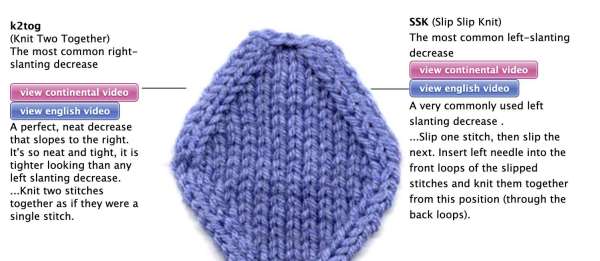
I feel like there are fewer options for decreases in knitting than there are increases, but it may just be that there are a few that are used really commonly. Most of the time you will use either knit two together or slip, slip, knit. K2tog is usually the decrease most people learn first, and when you want to be a little fancier and start using mirrored increases you can add in ssk. (For reference, knit two togethers slant to the right, while slip, slip, knits slant to the left.)

I have always loved this visual guide to knitting decreases from Knitting Help, which shows you what all the different decreases look like and how you can pair different decreases that lean different ways. For example you can also pair a knit 2 together with a slip, slip, purl instead of a slip, slip, knit, which makes a tighter looking decrease than a ssk.

The page linked above has written instructions for each decrease, as well as links to videos if you need them. it only covers single decreases, which are the most common kinds of decreases, but sometimes you want to decrease more than one stitch at a time.

In that case you will want to use what’s known as a double decrease. The most common of these is known as the centered double decrease, which is a great design element when you don’t want a decrease that leans. (It’s done by slipping a stitch, knitting two together, then passing the slipped stitch over the stitch you just worked.)

But there are other options, as this post from Tonia Knits explores. It describes 10 different ways to make double decreases. Between these two pages you’ll probably have every decrease you could ever need in your knitting career!

[Photo: Knitting Help.]

Learn Basic Decreases to Shape Your Knitting

Your Quick Reference Guide to Common Increases and Decreases
Make Prettier Decreases with This Tip

Next Pattern:

  • Book Review - Operation Sock Drawer: The Guide to…
  • Complete Knitting Needle Guide
  • Build Your Knitting Skills with the Rebecca Page…
«
»

Have you read?

Vintage Baby Sweater Knitting Pattern PDF – Baby Cardigan and Crew Neck Jumper

There is something very sweet about vintage baby knitting patterns, especially the ones that still feel wearable today. This Vintage Baby Sweater Knitting Pattern PDF from the CraftGossipStore has that lovely old-fashioned charm without looking fussy or too dated, which is exactly what makes it a nice find for knitters who enjoy making baby gifts with a bit of heirloom feeling.

The pattern includes two classic baby sweater styles: a textured crew neck jumper and cardigan options with raglan sleeves. The stitch pattern gives the finished pieces that beautiful handmade texture we all love, but it still feels practical enough for real babies — not just the kind of outfit that gets worn for one photo and then carefully folded away forever.

You can find the pattern here: Vintage Baby Sweater Knitting Pattern PDF from CraftGossipStore.

This is a restored vintage knitting pattern delivered as a printable PDF, so there is no physical pattern posted out. After purchase, the file is available through Etsy as an instant digital download, which is handy if you’re the sort of knitter who gets an idea at 9 pm and wants to cast on before common sense has a chance to intervene.

The pattern is designed for 8 ply / DK weight yarn, which makes it a practical choice because DK baby yarn is easy to find in soft modern colours. It uses 3.25 mm and 4 mm knitting needles, along with stitch holders, buttons for the cardigan versions, a yarn needle, scissors, and measuring tape.

What I like about this pattern is the flexibility. Worked in cream, lemon, powder blue, sage green, oatmeal, dusty pink, or warm beige, it would suit either a traditional baby wardrobe or a more modern neutral nursery style. The cardigan version is especially practical because cardigans are always easier when dressing little ones. Anyone who has ever tried to wriggle a jumper over a sleepy baby’s head will understand that immediately.

Because this is a vintage pattern, it is worth remembering that older knitting patterns are often written more briefly than modern ones. They tend to assume the knitter already knows a few things, so I’d recommend this for confident beginners through to intermediate knitters rather than someone picking up needles for the very first time. If you’re comfortable reading shaping instructions, checking gauge, working textured stitches, and sewing seams neatly, this should be a very satisfying little project.

Before starting, make a tension square. I know, I know — no one wants to hear it, but baby garments are small enough that gauge really does matter. A tiny difference in tension can quickly change the finished size, and nobody wants to finish a beautiful baby cardigan only to discover it fits a doll or a toddler with very optimistic shoulders.

This pattern would make a lovely baby shower gift, newborn photo outfit, heirloom baby knit, or handmade market sample. It is also a nice choice for knitters who enjoy vintage patterns but prefer having them cleaned up into a more usable digital format.

If you need supplies, look for a soft DK baby yarn, smooth knitting needles, small cardigan buttons, stitch holders, and a blunt yarn needle for finishing. Mary Maxim is always worth checking for baby yarns and classic knitting supplies, while Amazon can be handy for basics like stitch holders, measuring tapes, button packs, and printed pattern binders if you like keeping your PDF patterns organised.

For anyone who enjoys traditional baby knitting, this is a sweet little pattern with plenty of charm. It has that “made by Grandma, kept forever” feeling, but with enough simplicity to make it useful for everyday babywear too.

Categories

baby hat Baby Patterns Beginner Book Reviews cardigan Christmas CraftGossip Giveaways Craft News and Events Free Knitting Patterns Giveaways! Hats Knitting Articles Of Interest Knitting Patterns Knitting Technique & Ideas mittens Quick scarf shawl patterns socks Sweaters

RSS More Articles

  • Samplers to Cross Stitch for the Fourth of July
  • DIY Flag Banner for 4th of July Decorating
  • Vintage Baby Sweater Knitting Pattern PDF – Baby Cardigan and Crew Neck Jumper
  • 12 Cards with the Colors of the Rainbow
  • 15 Dog Poop Bag Carriers You Can Sew For Your Dog
  • America 250 Fourth of July Activities for Kids
  • Patriotic Knitting Patterns to Celebrate America’s Birthday
  • 15 DIY 4th of July Porch Decor Ideas for a Festive Front Entry
  • How To Refresh An Old Cracked Ceramic Duck Garden Ornament
  • Patriotic Quilted Placemats – A Festive Table Project for Summer Sewing

Pick Your Blog

  • Sewing
  • Knitting
  • Quilting
  • Crochet
  • Home & Garden
  • Recycled Crafts
  • Scrapbooking
  • Card Making
  • Polymer Clay
  • Cross-Stitch
  • Edible Crafts
  • Felting
  • Glass Art
  • Indie Crafts
  • Kids Crafts
  • Jewelry Making
  • Lesson Plans
  • Needlework
  • Bath & Body
  • Party Ideas
  • Candle Making
  • DIY Weddings
  • Not Craft
  • Free Craft Projects

Copyright © 2026 · CraftGossip | Start Here | Contact Us | Link to Us | Your Editors | Privacy and affiliate policy